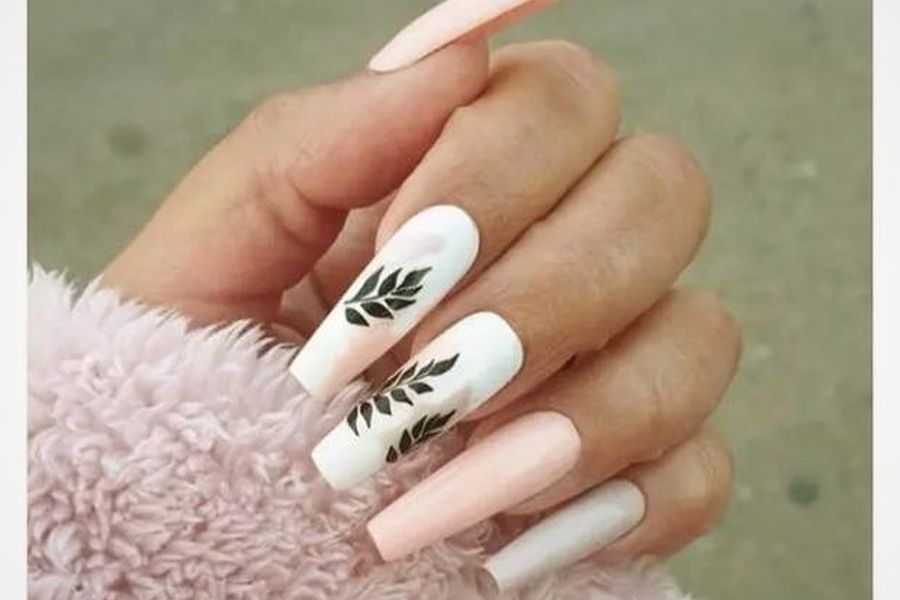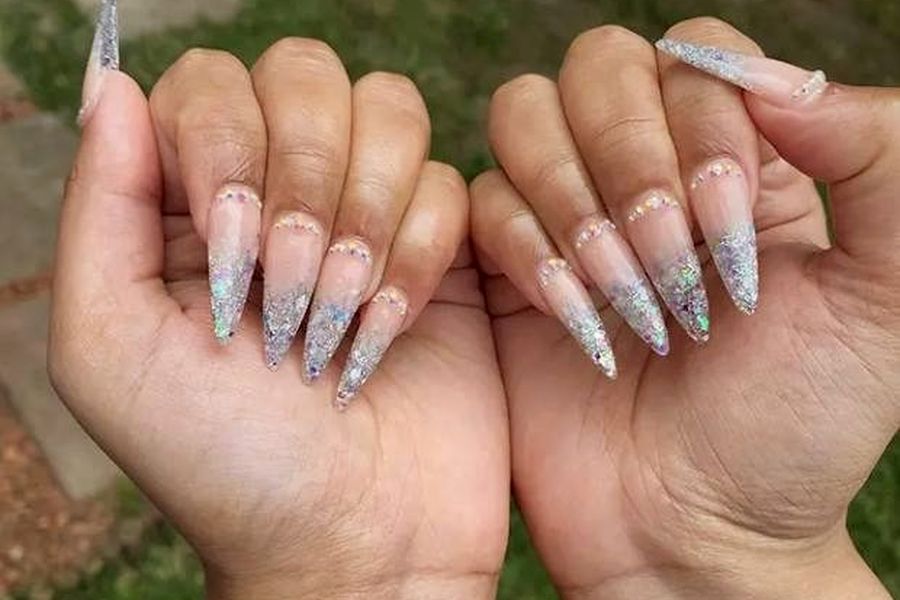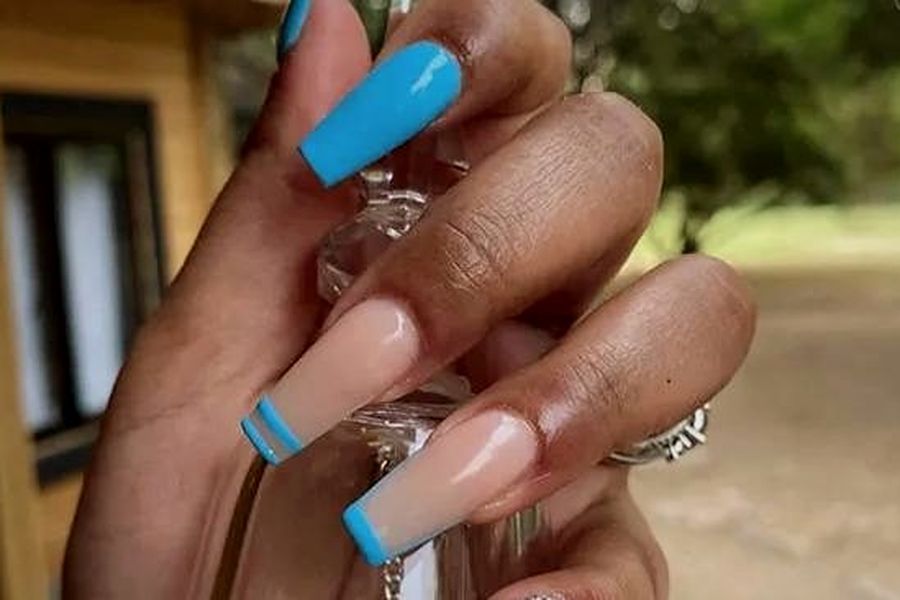
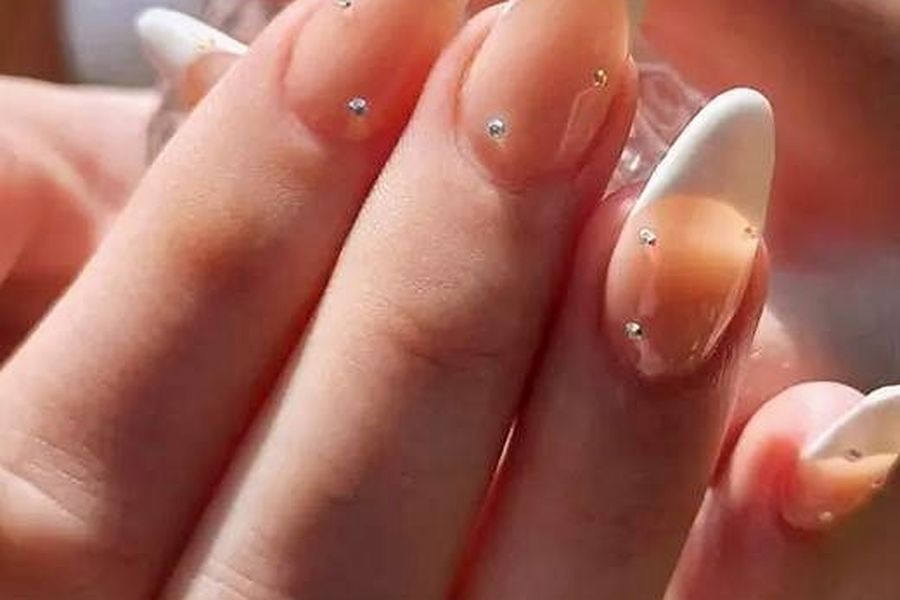
An overlay goes over your own nail. It does not add length — that is what tips are for — it adds a layer of strength on top of what you already have. Both gel and acrylic overlays do that job, and at R240 and R280 there is not much between them on price. The difference is in how they behave, and that difference should decide it.
What an overlay actually is
Think of it as a hard coat bonded to the surface of your natural nail. Your nail keeps its own shape and length; the overlay stops it bending, splitting and peeling while it grows out underneath.
People come to overlays for one of two reasons. Either their nails are weak and keep breaking at exactly the length they were starting to like, or they want polish that survives more than four days of real life. An overlay solves both, because the colour sits on a surface that does not flex.
Because no tip is involved, an overlay grows out rather than needing removal on a fixed schedule. You will still want a fill every three to four weeks once there is visible regrowth at the cuticle, but there is no point at which the whole thing has to come off.
How each one is applied
Gel is brushed on in thin layers and cured under a lamp, a few seconds at a time. It has almost no smell and the whole process is quiet.
Acrylic is mixed on the spot — a powder and a liquid brought together on the brush — and it hardens in air rather than under a lamp. It has a distinct smell, which fades, and it needs to be worked quickly and precisely before it sets. Neither is better; they are different materials with different handling.
How gel behaves
Gel is the more flexible of the two. It has a little give, so it moves slightly with your nail rather than fighting it. On thin or naturally bendy nails that flexibility is an advantage — a rigid product on a flexible nail is exactly how you get lifting at the edges.
It also finishes with a high natural shine and feels lighter on the hand, which makes it the more comfortable option if you have never had anything on your nails before.
The trade-off is durability. Gel is strong, but it is not as hard as acrylic. If you are rough on your hands — gardening, packing boxes, constantly in and out of water — a gel overlay will show wear sooner.
Gel overlay — R240
Best for thin or flexible nails, first-timers, and anyone who wants a natural feel and a glossy finish.
How acrylic behaves
Acrylic is harder and less forgiving. It sets rigid, which is exactly what you want if your nails are soft, if you tend to catch them on things, or if you need a set to survive a month of genuine use.
That rigidity is also the catch. On a very flexible nail, a hard overlay creates a stress point where the two disagree, and that is where cracks begin. It is thicker too, so it feels like something is on your hands. Most people stop noticing within a day, but the first day is noticeable.
Acrylic takes paint and gel beautifully, which is why the combinations exist: acrylic overlays with paint at R300, and acrylic overlays with gel at R330 — the hardness of acrylic underneath, the shine of gel on top.
Acrylic overlay — R280
Best for soft nails that break, hands that work, and the longest wear between visits.
Weak or peeling nails: which is kinder?
This is the question we are asked most, and the answer is usually gel — but not always.
If your nails peel in thin layers, that is generally a moisture problem rather than a strength problem, and gel's flexibility sits more comfortably on a compromised nail. If your nails are soft and bend rather than peel, acrylic gives them something to push against.
What matters more than either choice is how the previous set came off. Most of the damage people blame on overlays actually happened during removal — a set picked at over a week, or prised off in a hurry, takes the top layers of the natural nail with it. Whichever you choose, come in for a proper soak-off.
Removal compared
Gel generally soaks off faster than acrylic. Neither should be forced. A soak-off is R130 on its own, or R80 when it is done as part of a new set — which is worth knowing if you are switching between the two, because it makes the change cheaper than most people assume.
Two myths worth putting down
The first is that overlays make your nails weak. They do not; badly removed overlays do. Nails that have been under a well-maintained overlay for months are usually in the same condition they went in.
The second is that your nails need to breathe. Nails are not living tissue and do not take in air. What they do need is moisture, which is why cuticle oil matters far more than a rest period does.
Cost and upkeep, honestly compared
- Gel overlay R240 · gel fill R180
- Acrylic overlay R280 · acrylic fill R200
- Soak-off R130, or R80 with a new set
- Nail repair, per nail R30
Across a year of three-weekly fills the difference works out at a few hundred rand. It is not really a budget decision. Choose on how your nails behave, not on the twenty rand between the fills.
What we would recommend
If you genuinely do not know, start with the gel overlay. It is the gentler starting point, slightly cheaper, and if it wears through faster than you would like, we will both know acrylic is the better fit for your hands. That is more useful than guessing.
Or come in and let us look first. Call the nail bar on 073 590 3317 and we will talk it through before booking anything.